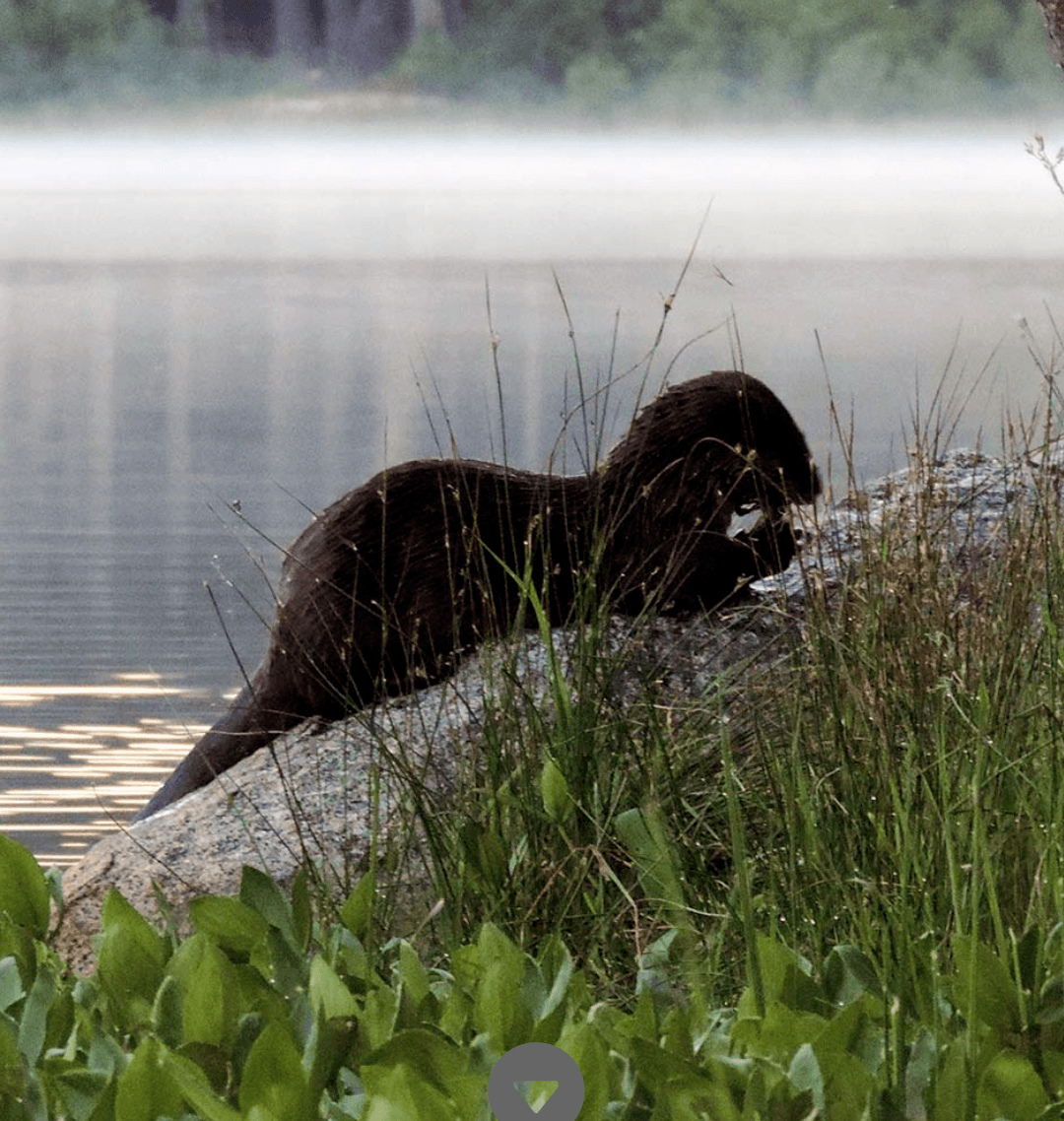
When Dario’s great-grandfather, Vittorio, was growing grapes and making wine from fruit sourced around St. Helena in the early 1900s, river otters were a thriving native species in the nearby Napa River and its numerous tributaries. But by 1977, Napa County was omitted from the California Department of Fish and Game’s list of counties with river otters.
The river otters’ gradual disappearance from the Bay Area was attributed to hunting, trapping, industrial water pollution, and land development leading to reduced wetland habitats. The devastation of the river otter population was so complete that by 1995, there were virtually no river otters living anywhere in the counties that make up the San Francisco Bay Area.
With the 1972 passage of the Clean Water Act, proactive watershed management, restoration of wetlands, and the efforts of local conservation groups, river otters have made a slow but steady comeback—and we couldn’t be happier about it.
Dario first became aware of local river otters a few years ago when he started spotting them in the Napa River near Calistoga. Since then, he has made it his mission to ensure Castello di Amorosa is doing everything possible to support them.
With sustainable agricultural practices, our winery and vineyards are Napa Green-certified , meaning we meet all regulatory components necessary for environmental sustainability, including water conservation and efficiency. The Castello recycles and purifies its water so that runoff is clean. The staff also maintains Lake Mario and Nash Creek—both connected to the Napa River—to ensure they remain ecologically healthy.
Dario is also working with Megan Isadore, co-founder and Executive Director of The River Otter Ecology Project, a conservation group dedicated to supporting the re-population of river otters. The organization provides educational programs, internships, volunteer opportunities, and conducts field research including habitat assessment and dietary analysis.
If you happen to see a river otter anywhere in the Bay Area, be sure to report it—especially if you can provide a photo.
For more information, visit www.riverotterecology.org.